
Where the World’s Most Beautiful Yachts Are Born
There is a stretch of Tuscan coastline — running from Viareggio through Pisa, Livorno, and Massa-Carrara — where extraordinary things are built. Not just boats, but floating masterpieces: custom superyachts over 30 metres that sail into the hands of armateurs, entrepreneurs, and celebrities from every continent. This is the Tuscany yachtbuilding district, and it holds approximately 40% of the global market in its segment.
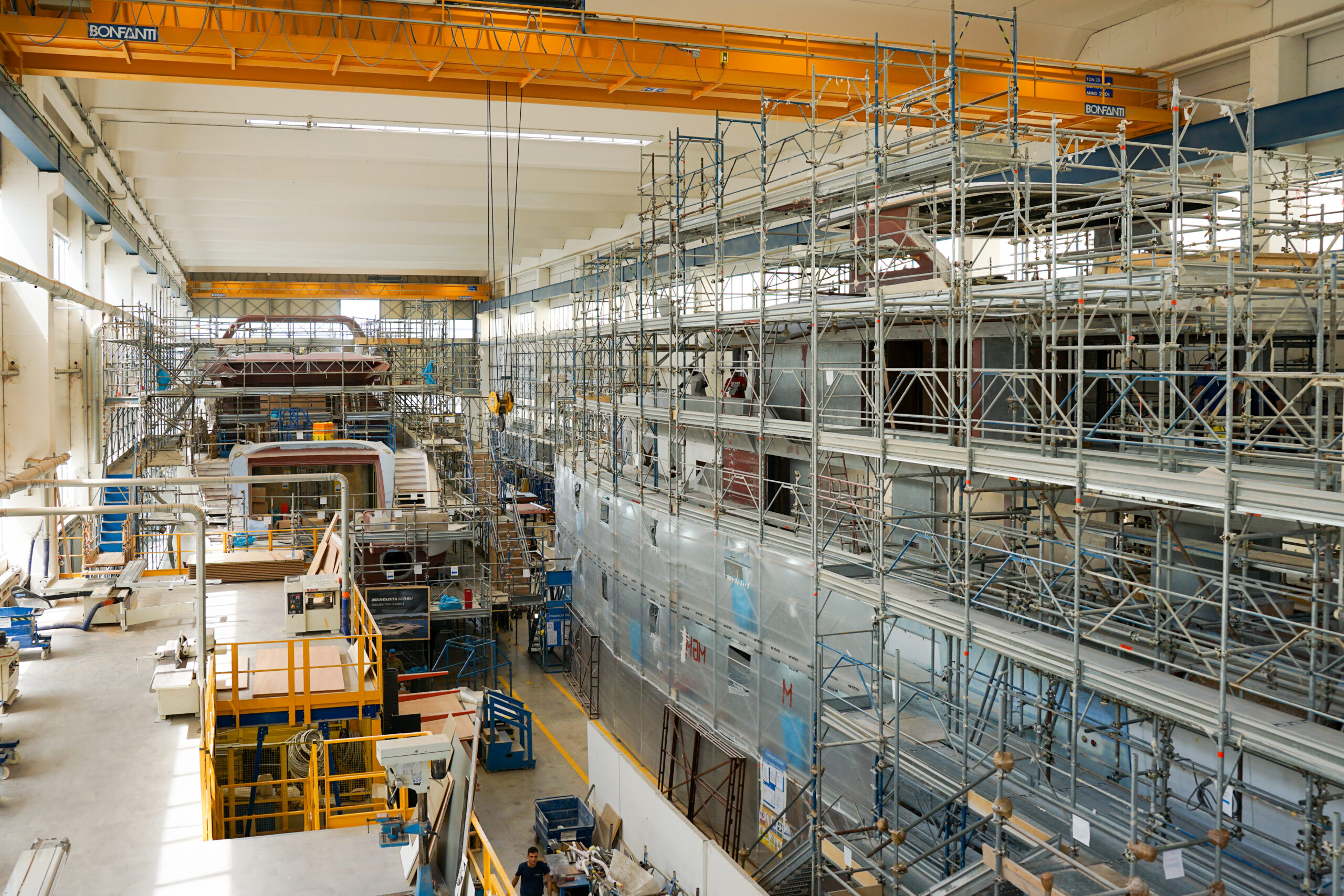
On 15 June 2026, Invest in Tuscany — the Tuscany Region’s dedicated investment attraction and industrial development office — opened this world to an international press delegation. The day’s itinerary brought journalists inside the Navigo Tuscany Cluster headquarters, and through the shipyards of two of the district’s flagship names: Overmarine Group and Rossinavi. The goal was not simply to showcase industrial excellence, but to demonstrate how a public institution actively partners with private enterprise to build, protect, and scale one of Italy’s most extraordinary manufacturing ecosystems.
Invest in Tuscany and the Navigo Tuscany Cluster: Two Sides of the Same Strategy
The press tour was no coincidence. It was designed to make visible a model that is often invisible: the strategic alignment between public policy and private excellence that defines the Tuscan approach to industrial development.
Invest in Tuscany sits at the centre of this model. When a multinational or major investor chooses to establish a presence in Tuscany, they find a dedicated public structure offering personalised pathways, administrative assistance, and free bureaucratic support. This is not passive attraction — it is active partnership.
Navigo Tuscany Cluster is the operational heart of the district: a services centre and connection network that links the region’s shipyards, suppliers, research institutions, and training bodies into a coherent, competitive whole. Together, Invest in Tuscany and Navigo represent the institutional infrastructure behind a sector that sells almost entirely abroad.
The results speak for themselves. Tuscany currently ranks fourth in Italy for foreign direct investment attraction, with the United States, Germany, and France as its leading investor nations. Between 2019 and 2025, Invest in Tuscany finalised 303 foreign investment operations, generating over €12 billion in investment and creating 15,000 new jobs across the region. In 2026, this model received a prestigious double recognition at the Investment Impact Awards from fDi Intelligence, the Financial Times’ specialist division.
The Numbers Behind a Global Industry
The Tuscany yachtbuilding district is not a niche. It is a strategic industrial pillar.
- 4,500 companies across the coastal supply chain, with over 900 concentrated in the Viareggio area alone
- 22,000 jobs generated across the sector
- €4 billion in annual turnover
- 21.2% of total Italian nautical exports
- €1.57 billion in Tuscan nautical exports in 2024 — a record figure, sustained by a compound annual growth rate of over 20% across the last four years
- 98% of production destined for international buyers
These figures position the district not merely as a regional asset, but as a driver of Italy’s global manufacturing reputation in the ultra-premium segment.
Overmarine Group and Rossinavi: Excellence on the Water
The press tour brought journalists inside two of the most internationally recognised names in Tuscany yachtbuilding.
Overmarine Group, home of the iconic Mangusta brand, is synonymous with sportive design and performance engineering. Its vessels combine Italian aesthetic ambition with technical precision — a combination that has earned the shipyard a loyal international clientele across decades.
Rossinavi represents a newer generation of Tuscan excellence: a shipyard that has built its reputation on fully custom aluminium and steel superyachts, working closely with the world’s leading naval architects and design studios. Its projects are defined by a commitment to bespoke craftsmanship and close client collaboration from keel to delivery.
Together, the two shipyards illustrate the breadth of the Tuscan model: from performance-driven semi-custom production to fully tailored one-of-a-kind builds — all rooted in the same coastal manufacturing ecosystem.