
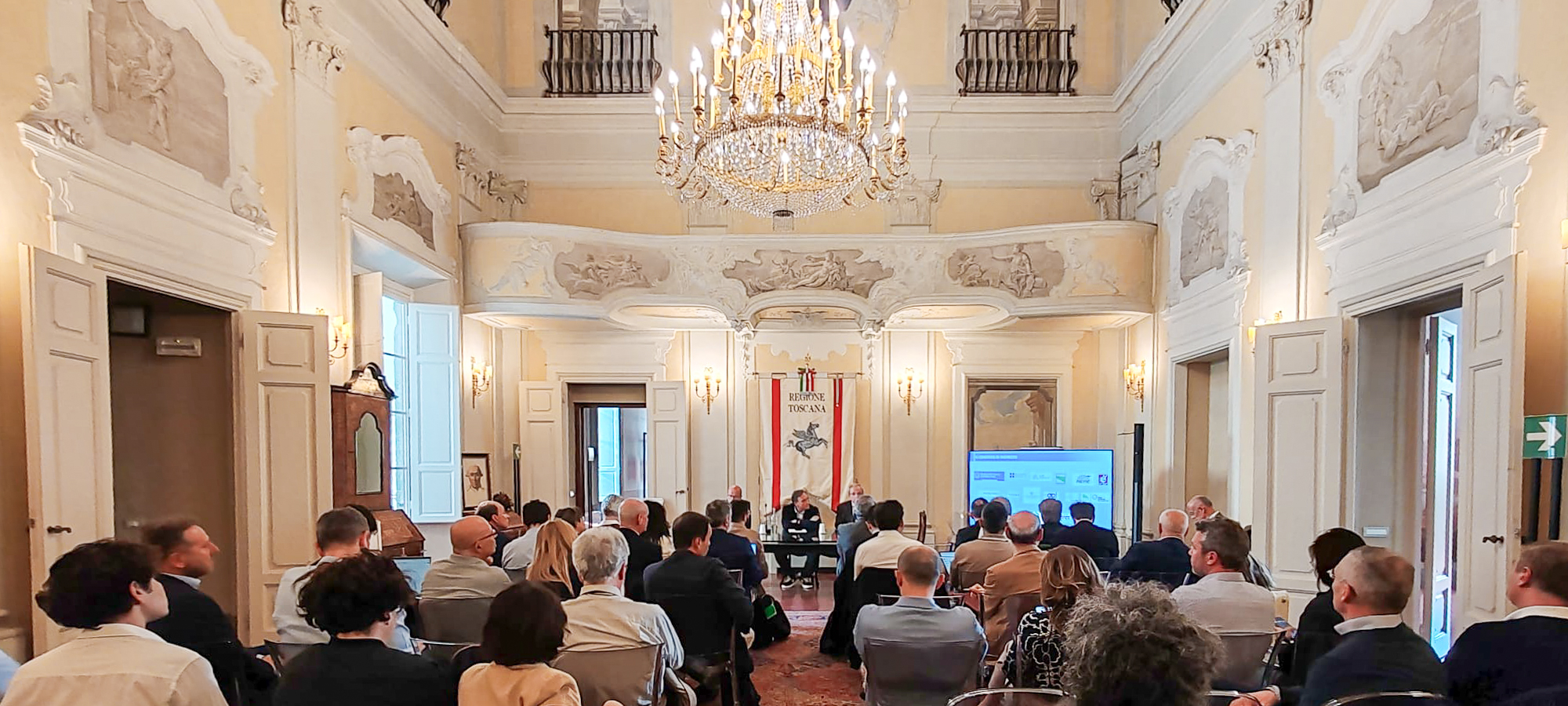
Tuscany’s automotive supply chain is adapting to one of the most significant transformations in the industry’s history. On 20 April 2026, at the Sala Esposizioni of Palazzo Strozzi Sacrati in Florence, the results of a major research study were presented to institutions, industry representatives, and experts — offering a clear-eyed assessment of where Tuscany stands, and where the opportunities lie.
The event, organised under the banner of “La Filiera Automotive in Toscana: Mappatura degli attori ed opportunità di investimento”, brought together a high-level panel including Leonardo Marras, Regional Councillor for Economic Development, researchers from the University of Pisa, and representatives of companies such as Yanmar, Magna International, PontLab, High Performance Engineering (H.P.E.), Asso Werke, and Dumarey.
A research study built for a moment of transition
The study was promoted by MOVET (Centro di Iniziativa su Motori, Veicoli, Tecnologie), conducted by the University of Pisa in collaboration with the Osservatorio TEA — Italy’s national observatory on transformations in the automotive ecosystem — and funded by Regione Toscana. Its aim is to provide a structured, multidisciplinary reading of the technological, regulatory, market, and social changes currently reshaping the automotive supply chain at both national and regional level.
The broader context is well-known: the shift towards electrification, tightening emissions regulations, and changing consumer behaviour are generating significant uncertainty across the industry. Yet the research makes a point of identifying the other side of that uncertainty — the genuine growth opportunities that are emerging for companies willing and able to navigate the transition.
Complexity requires collaboration
A central message emerging from the research is that no single actor can manage this transition alone. Capturing the available opportunities and limiting the negative impacts of the shift requires multidisciplinary competencies and active collaboration between the various players that contribute — each in their own way — to the economic, environmental, and social sustainability of the automotive ecosystem.
This applies at both the national and regional level. Tuscany’s supply chain, with its mix of established manufacturers, specialist engineering firms, and research institutions, is well-positioned to build the kind of collaborative frameworks the transition demands — provided the right conditions are in place.
What this means for investors
For companies and investors looking at Italy’s industrial landscape, the research offers a timely and detailed map of where Tuscany’s automotive sector stands today, which actors are driving change, and where the most significant opportunities for investment and partnership are concentrated. The combination of strong academic research capacity, regional institutional support, and a diverse industrial base makes Tuscany a compelling location for those seeking exposure to Europe’s evolving automotive supply chain.
What it means for Tuscany’s innovation ecosystem
The event also signals a broader commitment by Regione Toscana and its partners to support evidence-based industrial policy. By investing in structured research on the supply chain’s composition and trajectory, the region is equipping itself — and its businesses — with the knowledge needed to make strategic decisions in a fast-changing environment. For potential investors, this institutional attention to data and long-term planning is itself a positive signal about the region’s approach to economic development.